From the Google AI Hackathon to Production: The Story Behind My Portfolio AI
How a high-energy weekend in Stockholm inspired my portfolio assistant, what one year of real-world usage taught me about the reality of 'RAG', and why I'm evolving it with Google Gemini.
1. The Spark in Stockholm: May 2025
In May 2025, I attended the Google Cloud AI Hackathon in Stockholm. The room was buzzing with creative energy and shared ambition. Coding alongside fellow developers and exploring what modern generative AI could achieve firsthand ignited a powerful spark in me.
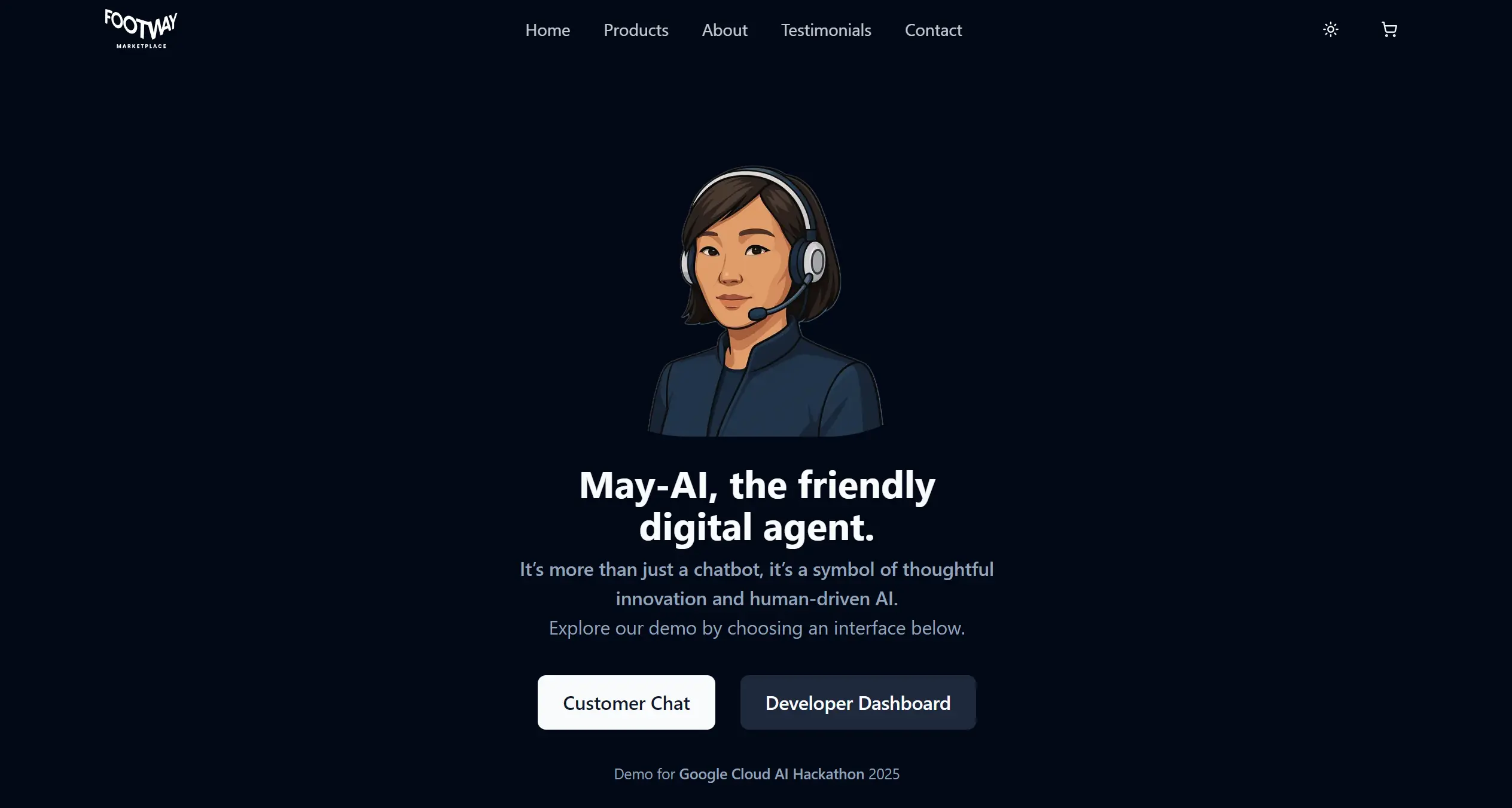
I walked out of that hackathon with a clear realization: my own portfolio shouldn't just be a static gallery of links and a downloadable PDF resume. Having transitioned from over 15 years of executive leadership in finance and HR in Paris to modern full-stack web and mobile engineering at Hyper Island in Stockholm, I have an uncommon cross-disciplinary profile. Visitors, recruiters, and clients frequently had the same natural questions:
- Why transition from executive finance/HR into tech?
- What is your exact stack, and what kinds of projects do you build?
- How does your business background influence your software engineering?
I wanted an interactive digital representative that was available 24/7—an assistant that could greet visitors, answer their curiosities in fluent English or Swedish, and offer helpful context before they reached out via email or LinkedIn.
2. The First Version: Riding the 'RAG' Wave
In spring 2025, RAG (Retrieval-Augmented Generation) was the defining buzzword across the developer ecosystem. Every tutorial, article, and tech thread echoed the same advice: "If you want an assistant on your own data, you need RAG."
I embraced the challenge and built what best practices suggested at the time:
- Structured my entire portfolio background, projects, and QA pairs into a centralized JSON file.
- Pre-computed dense vector embeddings with sentence-transformers (all-MiniLM-L6-v2).
- Executed semantic cosine similarity matching on the serverless runtime using Transformers.js.
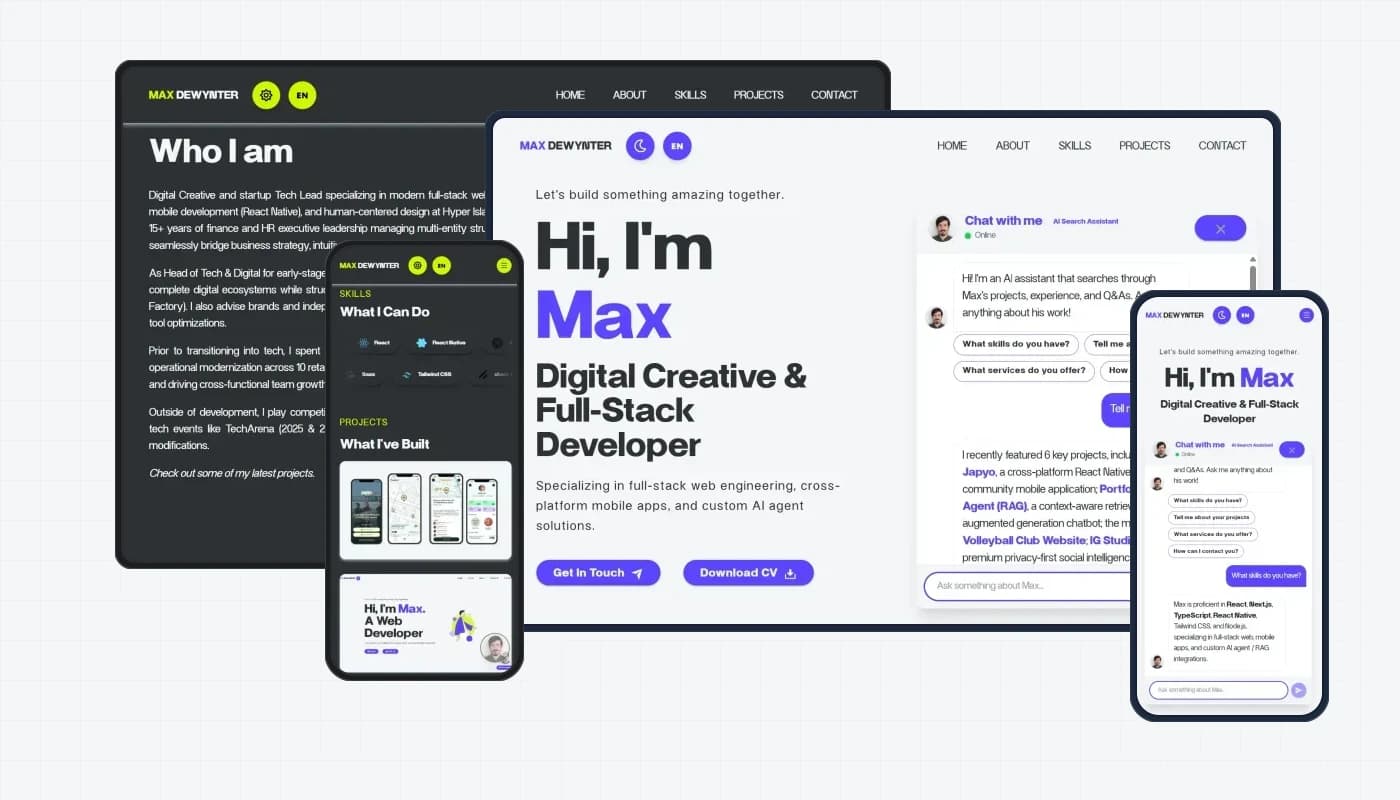
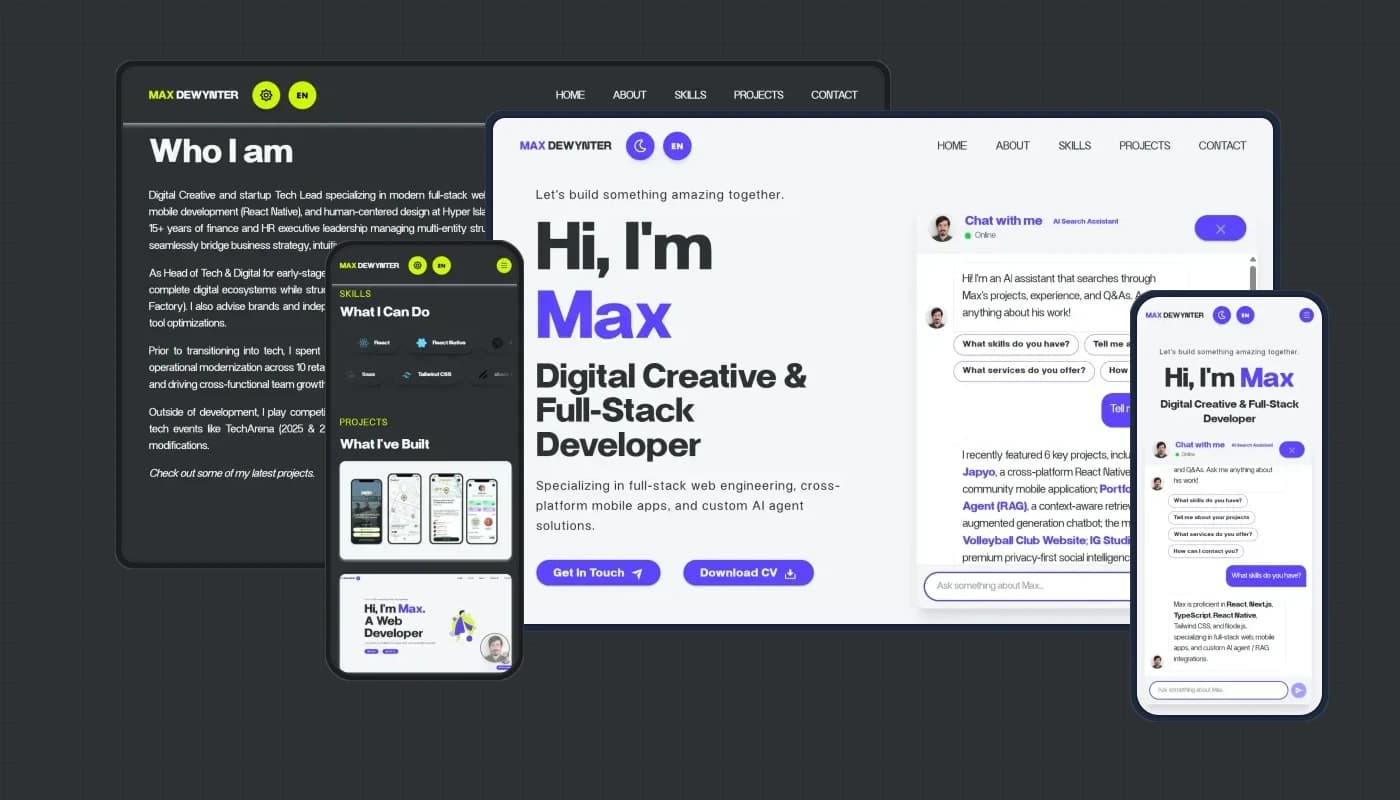
When it first went live, it felt like a real triumph. Visitors could click the chat avatar in the corner, type a query, and receive an instant answer. It was functional and delivered real utility.
3. One Year Later: The Honest Audit
Now, a full year has passed. During this period, I've shipped more full-stack web and mobile applications (including the Japyo React Native app and automation systems like IG Studio). With more engineering mileage behind me, I sat down to perform an honest, rigorous technical review of my own codebase.
And looking under the hood with a critical eye, the truth became unmistakable: what I had built wasn't truly a RAG system.
The Missing 'G' in RAG
RAG stands for Retrieval-Augmented Generation. My system did the Retrieval (finding the closest vector match), but there was no Generation. The assistant was not generating a personalized, dynamic reply—it was simply grabbing a static, pre-written text string from a JSON file and pasting it back.
In production, that architectural reality caused three fundamental friction points:
1. The Cross-Context Blind Spot
If a visitor asked a multi-threaded question—such as how my finance leadership background shapes my frontend component architecture—vector similarity failed. There was no single pre-authored chunk containing both concepts simultaneously.
2. Unnecessary Architectural Overhead
Maintaining local ONNX runtimes, vector cosine math, and deterministic hash fallbacks bloated serverless bundles by tens of megabytes and introduced cold-start friction.
3. A Rigid Conversational Dynamic
A genuine AI assistant should listen, match the tone of the user, and engage in fluid dialogue—rather than functioning as a dressed-up search filter over an FAQ database.
4. First-Principles Thinking: 30 KB vs. 1,000,000 Tokens
When RAG first exploded in popularity in 2023, early language models were severely constrained by 4,000 to 8,000 token context windows. In that era, RAG was an absolute necessity: if you had hundreds of pages of documentation, you had to chop the knowledge into tiny vector fragments just to fit inside the prompt.
Today, the landscape has radically shifted. Frontier models like Google Gemini Flash feature active context windows exceeding 1,000,000 tokens.
When I paused and ran the numbers from first principles, the architectural path became obvious:
Why continue chopping 30 kilobytes of text into fragmented vector chunks—risking retrieval misses and losing global context—when a modern model can hold my entire life story, projects, and career history in active working memory at once?
5. Closing the Loop: The Next Chapter with Google Gemini
There is a satisfying narrative symmetry to this evolution: the journey began at a Google AI Hackathon in Stockholm, and now it steps forward powered directly by Google Gemini.
By adopting In-Context Grounding—providing my structured portfolio data directly within Gemini's system instructions—I achieve what I originally set out to create:
- 100% Reliable Information Retrieval: No missed chunks or vector score dropoffs. The model has complete access to every project nuance.
- Cross-Disciplinary Synthesis: When asked how my background in business leadership informs my frontend development, the assistant can thoughtfully connect the dots.
- Native Bilingual Conversational Agility: It transitions seamlessly between Swedish and English depending on the visitor, speaking with natural warmth.
- Lean, Resilient Serverless Architecture: Zero heavy local embedding runtimes in serverless, lightning-fast response times, and a cleaner codebase.
6. The Takeaway as a Developer
As engineers, it is deceptively easy to get caught up in trending buzzwords and implement complex architectures simply because everyone else is doing it.
To me, genuine engineering maturity is the willingness to audit your own work a year later with clear eyes, acknowledge what worked and what was over-engineered, and have the confidence to choose the most pragmatic, elegant architecture for the real problem at hand.

Curious? Test the Assistant Live!
Click on the chat bubble in the bottom right corner of the screen and ask any question about my journey, projects, or background.